

Powdery Mildew in the Greenhouse? Here Is What I Am Doing Naturally
A simple, down-to-earth guide to recognizing it, slowing it down and helping your plants recover.
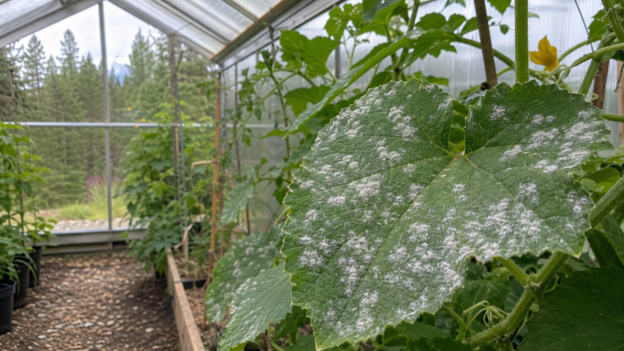
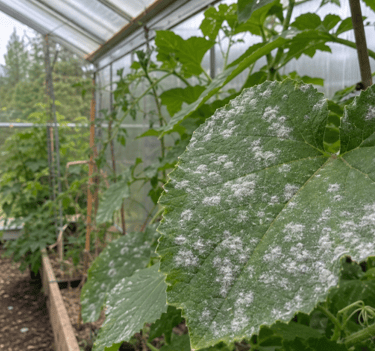
If you have ever walked into the greenhouse and found what looks like flour sprinkled across your cucumber or squash leaves, you are not alone. That is what happened in my greenhouse, and I knew right away that I was looking at powdery mildew.
It is frustrating, especially when a plant looked perfectly fine a few days earlier. My first thought was, 'What can I spray on this?' But the more useful question turned out to be, 'Why is this happening here?' Powdery mildew is a plant disease, but it is also a clue about the growing conditions around the plant.
The good news is that we can do quite a bit ourselves. We do not need a cabinet full of products, and we do not need to be expert gardeners. A few careful changes can slow the disease and give healthy new growth a better chance.
First, what exactly is powdery mildew?
Powdery mildew is a fungal disease. It is not dirt, dust or a mineral left behind by watering. The fungus grows mostly on the surface of leaves and sends tiny feeding structures into the plant's outer cells.
Unlike many fungal diseases, powdery mildew does not need a wet leaf to get started. It often likes the pattern we see in a greenhouse: humid nights and mornings followed by warmer, drier days.
What does it look like?
At first, you may see one or two small white circles. They can look like flour or baby powder. The spots grow, join together and eventually cover a large part of the leaf.
White or light-gray dusty patches on the top of a leaf
Similar patches underneath the leaf or on young stems
Leaves that begin to yellow, curl or dry around the edges
Older leaves dropping sooner than they should
Some squash and melon leaves naturally have silvery markings. Those markings usually follow the veins in a neat pattern. Powdery mildew looks more scattered and keeps spreading.
Why did it show up in my greenhouse?
A greenhouse protects plants from wind and cold, but that protection can also trap still, humid air. When leaves are crowded together, the air around them does not move very well. That creates a comfortable little pocket for powdery mildew.
The usual troublemakers are not mysterious:
Plants growing too close together
Thick vines and leaves blocking airflow
Closed vents and humid air sitting overnight
Shaded lower leaves that stay cool
Too much nitrogen feeding, which produces lots of soft new growth
A variety that is naturally more susceptible
This does not mean your soil is bad or that you did something terrible. Gardening always involves adjusting. The plant is simply showing us where an adjustment is needed.
What happens if I leave it alone?
A few spots late in the season may not cause much harm. A heavy outbreak can weaken the plant. Coated leaves cannot use sunlight as well, so they yellow, dry up and fall early. The plant may produce fewer cucumbers, squash or melons, and the harvest can end sooner than expected.
Powdery mildew does not usually kill a mature plant all by itself, but it can take a healthy, productive plant downhill surprisingly fast.
Can it spread to the rest of the garden?
Yes. The spores are light and travel on moving air. They can spread when a fan comes on, when a vent opens or when we brush against an infected leaf.
There is one helpful detail: most powdery mildew fungi prefer certain plant families. Mildew on a cucumber is most likely to threaten other cucumbers, squash, pumpkins and melons. It does not automatically mean every tomato, herb and flower will catch the same mildew. Still, I check everything nearby and pay closest attention to related plants.
What I am doing about it
There is no single miracle spray in my plan. I am trying to make the greenhouse less comfortable for the mildew and more comfortable for the plants.
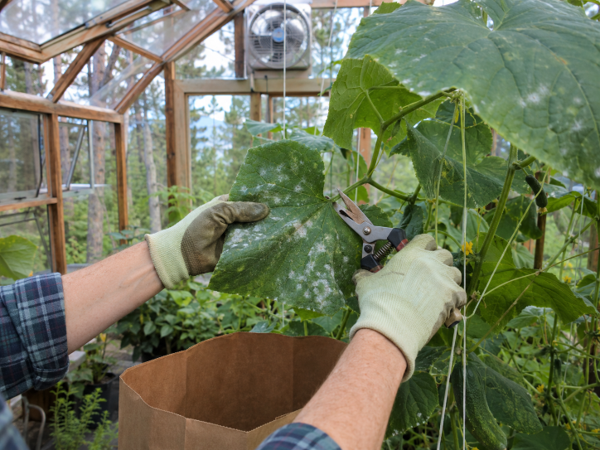
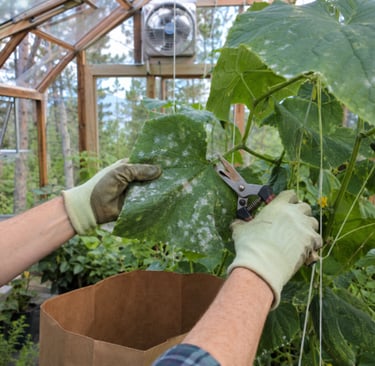
Remove the worst leaves. I cut off leaves that are heavily coated, yellowing or badly damaged. I work slowly so I do not shake spores everywhere, and I place the leaves directly into a bag. I do not strip the plant bare; it still needs enough healthy green leaves to make food.
Give the plant breathing room. I trellis long vines, move containers apart where I can and remove a few crowded interior leaves. The goal is not a perfectly bare plant. I just want air and light to reach through the canopy.
Keep the air moving. I open vents when the weather allows and use gentle circulation rather than a hard blast directly at the leaves. If you do not have a fan, opening a door and a vent on opposite sides can still create useful cross-ventilation.
Water early and low. I water the soil or root zone early in the day. That gives extra humidity time to leave before the greenhouse cools at night. Powdery mildew does not require wet leaves, but a damp greenhouse can invite other problems too.
Hold the extra fertilizer. It is tempting to feed a struggling plant, but too much nitrogen produces soft growth that powdery mildew likes. I stick with mature compost and balanced fertility instead of trying to force the plant to outgrow the disease.
The simple milk spray I may try
Milk is one home treatment with some real research behind it - especially on zucchini and other squash-family plants. A greenhouse study found that milk mixtures of 10 percent or more, applied twice a week, reduced powdery mildew on zucchini. Other field studies have had mixed results, so I think of it as a useful experiment rather than a guaranteed cure.
SIMPLE MIX Combine 1 cup plain milk with 9 cups water. That makes a 10 percent milk spray.
I would test the mixture on a few leaves first and wait a day or two. If the plant looks fine, spray both sides of the healthy and lightly affected leaves during the cool part of the morning. Good ventilation matters. Stop if you notice leaf injury, a sour odor or an unwanted residue building up.
I would not expect milk to clean up a leaf that is already covered. The badly damaged leaves still need to come off, and the airflow and humidity problems still need attention.
Home remedies I would skip
Natural does not always mean gentle. Vinegar, strong soap mixtures and concentrated essential oils can burn tender leaves. Baking-soda recipes are easy to mix too strongly and may add unwanted sodium. Compost tea is valuable to many gardeners for soil building, but SARE research found that it was not a dependable stand-alone treatment for pumpkin powdery mildew.
I would rather begin with pruning, spacing, ventilation, balanced fertility and a carefully tested milk spray on the right crop. Those choices are simple, affordable and easier on the whole greenhouse system.
A quick word about purchased garden treatments
Organic gardening does not have to be an all-or-nothing club. Some gardeners make every treatment at home. Others use an organic-compatible purchased input when a valuable crop is in trouble. There is room for both approaches.
If I ever mention a purchased treatment, I will talk about the active ingredient or type - not promote a brand. I will also put the do-it-yourself and cultural steps first. Words like natural and organic on the front of a package do not automatically make something harmless. The label still needs to list the crop, disease and greenhouse use. Certified organic growers should also check with their certifier before applying any new input.
How I hope to prevent it next time
Choose mildew-resistant varieties when they are available
Leave room for plants at their full-grown size
Trellis vines before they become a tangled wall
Open vents before humid evening air settles in
Water early at the root zone
Avoid overfeeding with nitrogen
Check the oldest and most shaded leaves every week
Remove infected crop debris at the end of the season
The honest gardener's bottom line
Powdery mildew is stubborn, but it is manageable. I may not save every damaged leaf, and that is okay. My job is to slow the spread, protect the healthy growth and learn what the greenhouse is telling me.
For me, the biggest lesson has been simple: the spray is only a small part of the answer. The lasting work is better airflow, less crowding, thoughtful watering and regular observation. Those are things any gardener can do, one small change at a time.
If you are not sure what is on your plant, take clear pictures of both sides of the leaf and contact your local Cooperative Extension office or Master Gardener help desk. Getting the identification right is always worth the effort.
White Mountain Garden Talk is owned and operated by SignalCast Media, LLC
Contact The Show
Copyright 2026 all rights reserved
SignalCast Media, LLC
+1 928-235-5998