
Rainwater Harvesting During Monsoon Season: Start Small and Let the Garden Drink
A simple gardener-written guide to catching, slowing and sinking summer rain in the White Mountains.
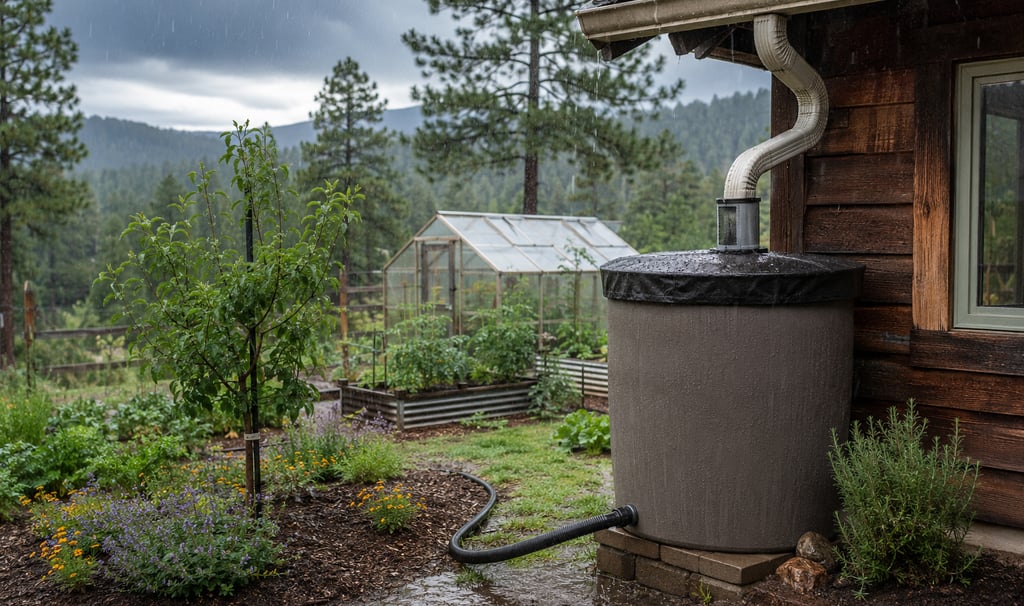
There is a moment during monsoon season when the sky darkens, the wind changes and the smell of rain moves through the pines. Then the water arrives - sometimes gently and sometimes all at once. In the White Mountains, that rain is far too valuable to watch rush off a roof, cut a channel through the garden and disappear down the drive.
Rainwater harvesting sounds like a large project, but it does not have to be. It can begin with one downspout, one covered barrel or one shallow basin beside a thirsty tree. The goal is not to capture every drop. The goal is to notice where the water already travels and help more of it stay useful on the land.
What is rainwater harvesting?
Rainwater harvesting simply means collecting or redirecting rain so it can be used instead of becoming unwanted runoff. Gardeners usually work with two basic approaches:
Active harvesting stores water in a barrel, tank or cistern so we can use it later.
Passive harvesting shapes the land with shallow basins, small berms, mulch and plants so water slows down and soaks into the soil.
The two approaches work well together. A barrel can catch the first useful amount from a roof, and its overflow can feed a mulched basin. In permaculture language, we are stacking functions: saving water, reducing erosion, supporting plants and building a healthier soil sponge with the same rainfall.
Why monsoon season matters here
The National Weather Service defines northern Arizona's monsoon season as June 15 through September 30. It also notes that much of northern Arizona receives roughly 40 to 50 percent of its yearly precipitation during this period. The rain is not steady. It often arrives in afternoon or evening thunderstorms, which means a lot of water can move across one property in a short time.
That suddenness is exactly why a simple system needs a good overflow plan. A small barrel can fill faster than most people expect.
How much water can a roof collect?
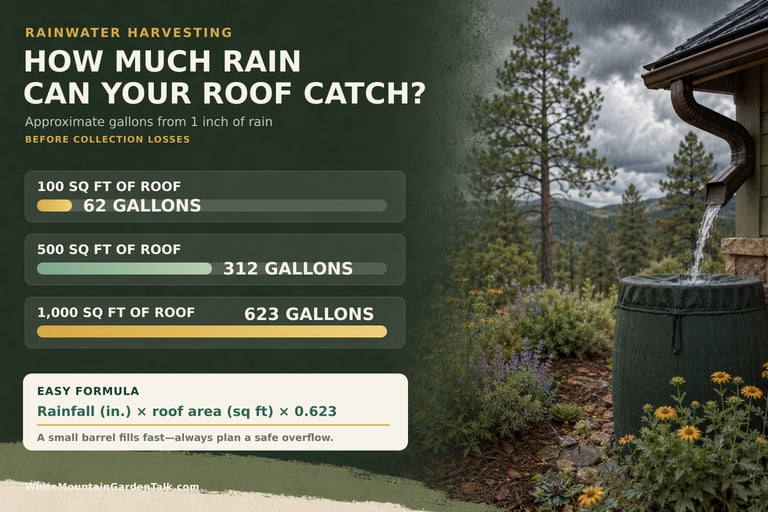
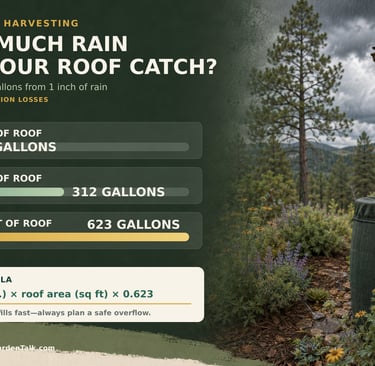
The University of Arizona uses a handy estimate: one inch of rain on one square foot of catchment equals about 0.623 gallons before allowing for splash, leaks and other losses.
EASY FORMULA Rainfall in inches x roof area in square feet x 0.623 = possible gallons before collection losses.
A 55-gallon barrel connected to only 500 square feet of roof can fill with less than a quarter inch of rain, even after allowing for some losses. That is wonderful - but it also means the overflow cannot be an afterthought.
Start by watching the water
Before buying or digging anything, observe. From a safe place during a gentle rain - or immediately after the storm has passed - notice which roof sections feed each downspout, where puddles form and where runoff is causing erosion. Do not walk outside during lightning or enter a flowing wash to inspect it.
Take pictures and mark the direction of flow. This is one of the most useful permaculture habits: observe first, then make the smallest change that solves the problem.
Option one: begin with one rain barrel
A simple barrel is an approachable way to learn. It will not water the whole homestead, but it can handle containers, a small pollinator bed or a young tree between storms.
Choose a safe container. Use a sturdy, opaque, food-grade container that has never held fuel, pesticides or unknown chemicals. Keep it completely covered. A purchased rain barrel is optional; a suitable repurposed food-grade container can work when it is clean, sound and fitted properly.
Set it on a level base. Water weighs about 8.3 pounds per gallon. Fifty-five gallons alone weighs roughly 460 pounds, so the barrel needs a stable, level pad that cannot settle or tip. Keep children from climbing on it.
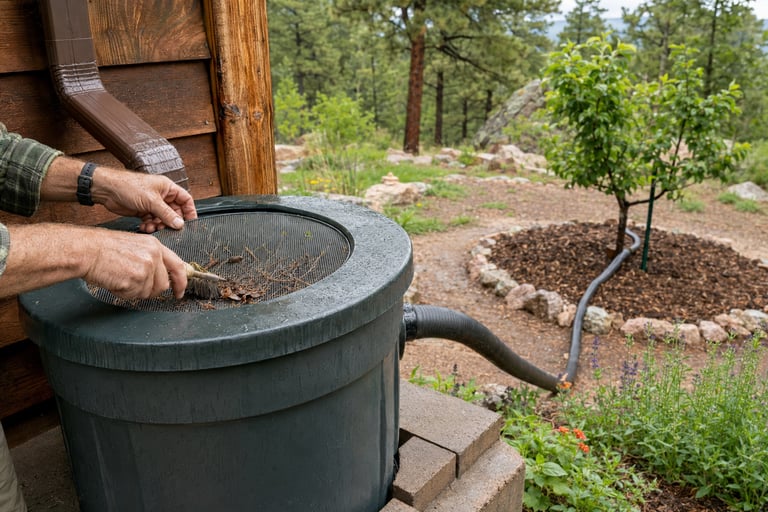
Screen every opening. Use fine, secure screening where water enters and anywhere insects could reach the stored water. This keeps leaves, animals and mosquitoes out. Clean the screen whenever debris collects.
Add a usable outlet. A low spigot, gravity hose or watering-can fill point makes it easy to use the water. Remember that gravity pressure from a small barrel is gentle; it will not behave like a household faucet.
Make overflow the priority. Use a wide overflow line capable of moving at least as much water as the inlet delivers. Route it away from the building foundation, septic areas, paths and neighboring property. A shallow, mulched planting basin is often a useful destination.
Consider a first-flush step. The first runoff can carry dust, pollen, bird droppings and roof debris. A rain screen and regular gutter cleaning are the basics. A properly designed first-flush diverter can send the dirtiest initial runoff away from storage, especially when water quality matters.
Use the water between storms. Make room for the next rain. Regular use also helps prevent stagnant water, odors, algae and mosquito problems. Check the inlet, lid, hose, spigot and overflow after each strong storm.
A quick screen cleaning keeps debris out; the overflow line carries extra water to a planted basin.
Option two: store rain in the soil
The least expensive storage tank is often healthy soil. A shallow basin on the downhill side of a tree or perennial bed can hold water long enough for it to soak in. Mulch protects the soil surface, slows evaporation and softens the force of heavy drops.
For a small, nearly level garden area, start with a broad shallow depression rather than a deep hole. Place the excavated soil on the downhill edge as a low berm, add several inches of coarse organic mulch and give the basin a level, armored spillway where extra water can leave without eroding the berm.
Do not build a basin that holds water against a foundation, blocks an established drainage route or sends water onto a neighbor's property. Do not cut swales into steep or unstable slopes without qualified site-specific guidance. When in doubt, keep the earthwork small and watch it through several storms before expanding.
THE GARDENER'S GOAL Slow it. Spread it. Sink it. Then give the biggest storm a safe way out.
Can I use harvested rainwater on vegetables?
Roof runoff is not automatically drinking water, even when it looks clear. Dust, smoke, bird droppings, roofing materials, gutters and storage containers can add germs or chemicals. The safest simple use is watering ornamental plants, shade trees and other plants we do not eat.
If you decide to use stored roof runoff in an edible garden, keep it off leaves and harvestable portions. Apply it to the soil or through a low drip line, and wash produce with potable water. The CDC advises using treated public water or bottled water for drinking, cooking, rinsing produce and, when possible, watering food crops. Water intended for household or livestock drinking needs appropriate testing, treatment and compliance with local requirements; a garden barrel is not a potable-water system.
Roof condition matters too. Do not collect irrigation water from a roof or gutter that may contain lead, asbestos, treated wood chemicals or other questionable materials. If the water source or intended use raises concerns, ask your local Cooperative Extension office or qualified water professional about testing.
My simple monsoon checklist
Clean the roof edge, gutters, downspouts and inlet screen before the next storm.
Confirm that the lid and every opening are secure against mosquitoes, animals and children.
Check that the full barrel will sit on a solid, level base.
Run the overflow to a safe, stable and useful place away from structures.
Mulch planting basins and protect spillways from erosion.
Use stored water between storms so there is room for more.
Inspect the system after hard rain and adjust what did not work.
Drain and protect above-ground components before hard freezes in colder White Mountains locations.
What if I want a larger system?
A larger tank can be worthwhile, but the decisions become more serious: tank weight, pad design, roof area, pipe size, overflow capacity, water quality, winter freezing and local building or plumbing rules. This is where professional design may save money and prevent damage.
If you purchase components, look past the marketing. Choose by safe material, actual capacity, screened access, opaque walls, fittings, warranty and a workable overflow. At White Mountain Garden Talk, mentioning a type of equipment is education, not a brand endorsement. The land-shaping and maintenance practices remain the heart of the system.
The down-to-earth bottom line
Rainwater harvesting is not about building the biggest tank or reshaping the whole property in one weekend. It is about becoming a better observer of water.
This monsoon season, choose one place to begin. Clean one gutter. Screen one barrel. Mulch one basin. Follow the overflow after one storm. Then make the next small improvement. Over time, those small choices can mean less erosion, deeper moisture, healthier trees and a garden that works with the rain instead of watching it run away.
White Mountain Garden Talk is owned and operated by SignalCast Media, LLC
Contact The Show
Copyright 2026 all rights reserved
SignalCast Media, LLC
+1 928-235-5998