
Wild Yeast, Wild Places: Creating a Juniper Berry Sourdough Starter
There’s something deeply satisfying about making bread the way our ancestors once did—using the wild microbes floating in the air and living on plants around us.
There’s something deeply satisfying about making bread the way our ancestors once did—using the wild microbes floating in the air and living on plants around us. Long before commercial yeast packets lined grocery store shelves, people relied on wild yeast and natural fermentation to leaven bread.
Here in the White Mountains, one traditional ingredient stands out for encouraging fermentation and adding local character: juniper berries.
In this guide, we’ll walk you through what wild yeast is, why juniper berries work so well, and how you can create your very own juniper berry sourdough starter right at home.
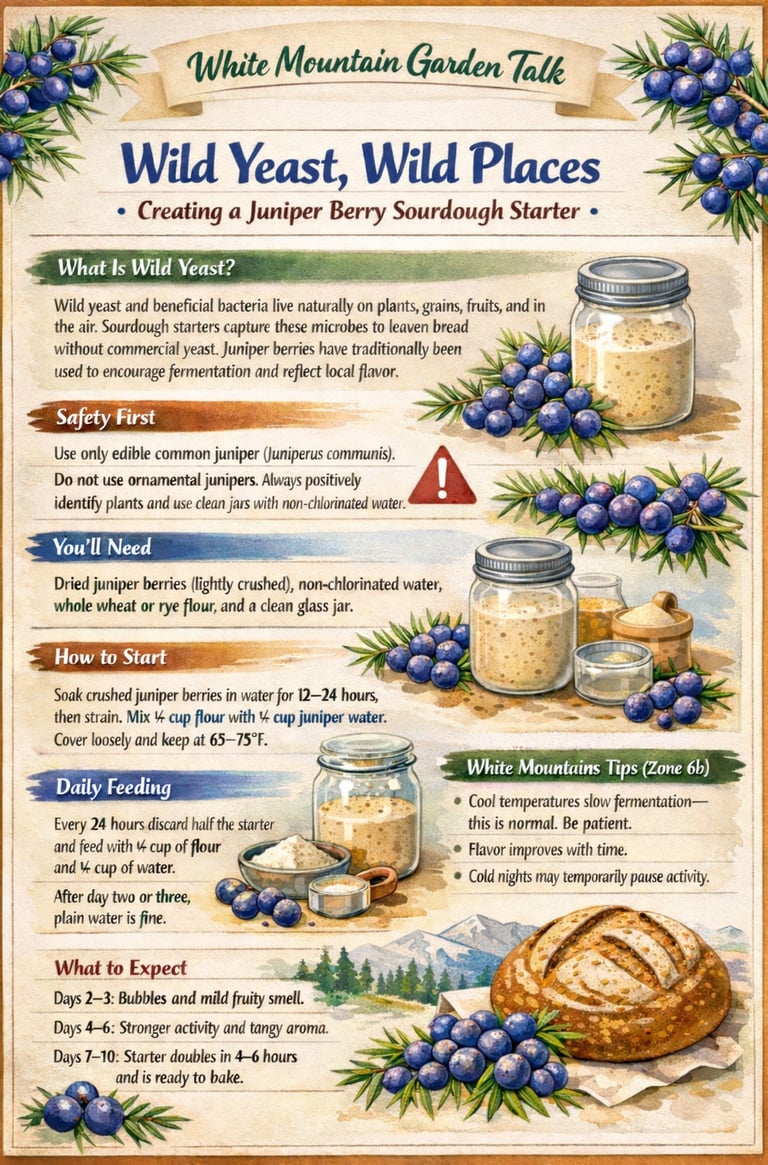
What Is Wild Yeast?
Wild yeast and beneficial bacteria live naturally on plants, grains, fruits, and even in the air around us. When flour and water are mixed together and left at room temperature, these microorganisms begin to multiply, creating a living culture known as a sourdough starter.
This starter ferments dough, producing carbon dioxide that makes bread rise—without the need for commercial yeast.
Juniper berries have traditionally been used in fermentation because they naturally carry yeast on their skins and contribute subtle, earthy flavors that reflect the local landscape.
Safety First
Before harvesting or using juniper berries, it’s important to know:
• Use only edible common juniper (Juniperus communis)
• Avoid ornamental or non-edible varieties
• Always positively identify plants
• Use clean jars and non-chlorinated water
If you’re unsure about plant identification, consult a local foraging guide or expert.
What You’ll Need
To get started, gather:
Dried juniper berries (lightly crushed)
Non-chlorinated water (filtered or left out overnight works well)
Whole wheat or rye flour (best for starting fermentation)
A clean glass jar
That’s it—simple ingredients, big flavor.
How to Start Your Juniper Berry Starter
Step 1: Make Juniper Water
Soak lightly crushed juniper berries in water for 12–24 hours.
Strain out the berries, keeping the infused water.
Step 2: Mix
In a clean jar, combine:
½ cup flour
½ cup juniper water
Stir until smooth.
Step 3: Rest
Cover loosely (a cloth or lid set on top works well).
Keep at room temperature around 65–75°F.
Daily Feeding Routine
Every 24 hours:
1. Discard half the starter
2. Feed with:
• ½ cup flour
• ½ cup water (after day two or three, plain water is fine)
Stir well, cover loosely, and return to a warm spot.
This process keeps your starter healthy and active.
What to Expect
Days 2–3:
You’ll start seeing bubbles and may notice a mild fruity smell.
Days 4–6:
Activity increases, with a tangy fermentation aroma.
Days 7–10:
Your starter should reliably double in size within 4–6 hours after feeding—this means it’s ready to bake!
White Mountain Tips (Zone 6b)
Living and gardening at higher elevation comes with a few fermentation quirks:
Cooler temperatures slow fermentation—this is normal
Be patient, especially in winter months
Flavor improves with time
Cold nights may temporarily pause activity
If your home runs cool, placing the jar near (not on) a warm appliance or wrapping it lightly in a towel can help.
Why Use Juniper Berries?
Beyond helping kick start fermentation, juniper berries add a subtle complexity to your starter. Many bakers describe hints of piney freshness and mild fruitiness in finished loaves—an edible reflection of the mountain environment.
It’s also a beautiful way to connect baking with local plants and traditions.
Using Your Starter
Once active, you can use your juniper starter just like any sourdough starter:
Rustic artisan loaves
Pancakes and waffles
Pizza dough
Rolls and biscuits
Be sure to keep feeding it regularly, or store it in the refrigerator if baking less often.
A Living Tradition
Creating a wild yeast starter is more than just a baking project—it’s a reminder of how connected food can be to the land around us.
By using juniper berries native to our region, you’re capturing a little piece of the White Mountains in every loaf of bread.
It’s slow living.
It’s traditional knowledge.
And it’s incredibly rewarding.
If you try making a juniper berry sourdough starter, we’d love to hear how it goes!
Share your photos, questions, and baking successes with us at info@whitemountaingardentalk.com and Listen Live here on the website or tune in on KVWM AM 970 on Saturday 2:00pm – 4:00pm MST or Sundays 11:00am – 1:00pm MST for more homesteading tips, gardening wisdom, and natural living inspiration.
Happy fermenting!
White Mountain Garden Talk is owned and operated by SignalCast Media, LLC
Contact The Show
Copyright 2026 all rights reserved
SignalCast Media, LLC
+1 928-235-5998